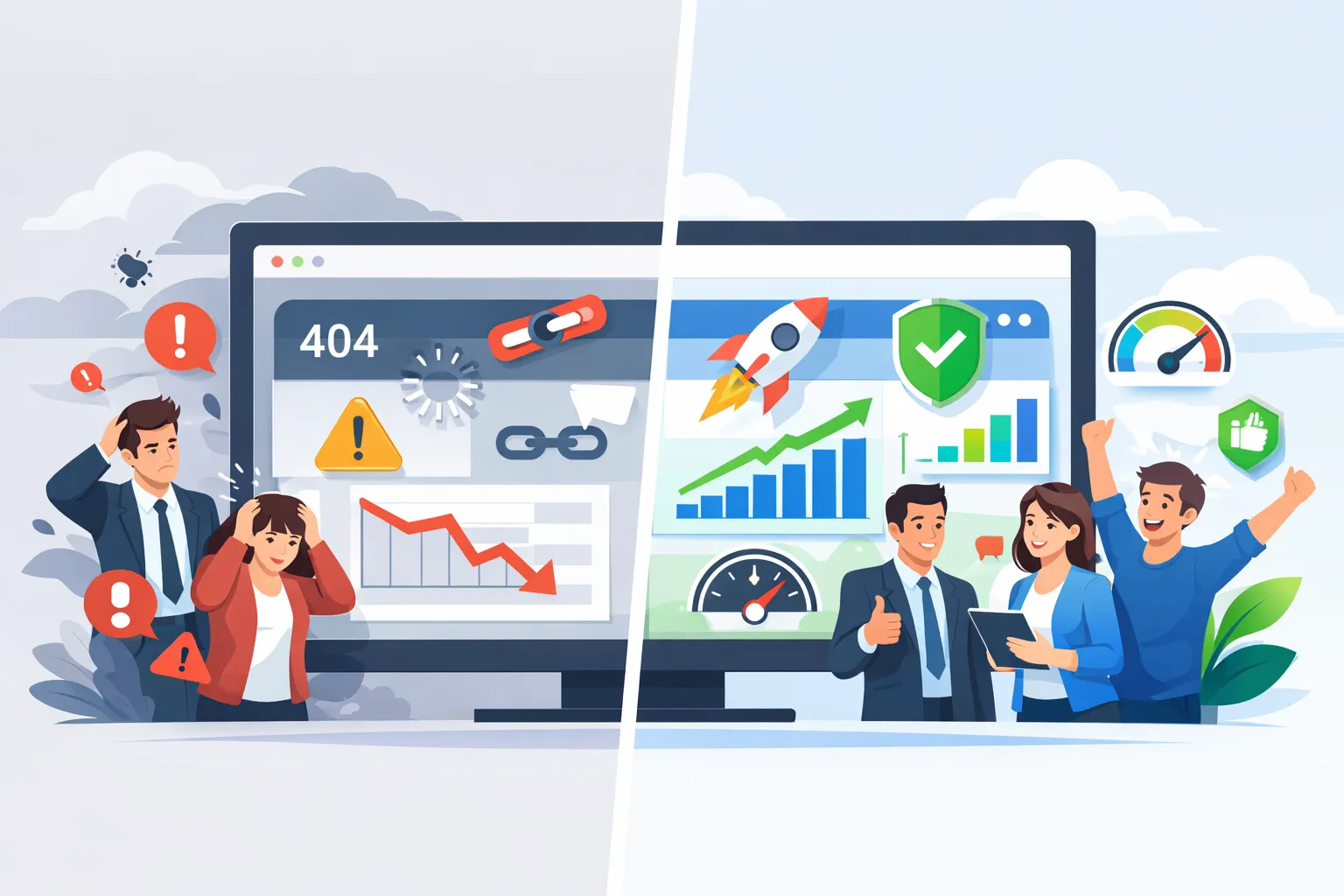
For many businesses, a website exists—but it does not perform. Instead of generating leads, building trust, or supporting growth, it becomes a source of frustration, lost opportunities, and hidden costs.
Below is a clear breakdown of the most common website pain points businesses face, why they happen, and how professional website development and optimization directly solve them.
1. Slow Website Speed That Drives Users Away
The Problem
One of the biggest pain points for businesses is slow-loading websites. Users expect pages to load within seconds. When they don’t:
- Visitors abandon the site
- Bounce rates increase
- Search engine rankings drop
This often happens due to:
- Poorly written code
- Unoptimized images
- Cheap hosting or bloated themes
The Impact on Business
- Lost leads and sales
- Poor first impressions
- Lower SEO visibility
The Solution
Professional website optimization focuses on:
- Clean, lightweight code
- Performance optimization
- Image compression and caching
- Speed-focused architecture
A faster website immediately improves user engagement and conversions.
2. Bugs, Errors, and Broken Functionality
The Problem
Broken forms, non-working buttons, page errors, and unexpected crashes are common issues in poorly maintained websites.
Typical causes include:
- Outdated plugins or frameworks
- No proper testing
- Inexperienced development
The Impact on Business
- Missed inquiries and leads
- Loss of customer trust
- Increased support complaints
The Solution
A structured development and testing process ensures:
- Bug-free functionality
- Cross-browser compatibility
- Regular updates and maintenance
Reliable websites build confidence and credibility.
3. Poor User Experience (UX) and Confusing Navigation
The Problem
Many business websites are designed without considering how users actually behave. Common UX issues include:
- Confusing menus
- Cluttered layouts
- Hard-to-find information
The Impact on Business
- Visitors leave without taking action
- Lower engagement time
- Weak conversion rates
The Solution
User-focused design improves:
- Clear navigation structure
- Logical content flow
- Conversion-driven layouts
Good UX turns visitors into customers.
4. Mobile Compatibility Issues
The Problem
A large percentage of users access websites from mobile devices. Non-responsive websites:
- Break layouts on small screens
- Load slowly on mobile networks
- Frustrate users
The Impact on Business
- Loss of mobile traffic
- Lower search engine rankings
- Reduced reach and accessibility
The Solution
Responsive website development ensures:
- Seamless performance on all devices
- Mobile-first design principles
- Improved SEO and engagement
5. Weak SEO Foundation and Low Visibility
The Problem
Many business websites look fine visually but lack a technical SEO foundation. Issues include:
- Poor site structure
- Missing meta tags
- Slow performance
- Non-semantic code
The Impact on Business
- Website does not rank on Google
- Low organic traffic
- Dependence on paid ads
The Solution
SEO-friendly development includes:
- Clean site architecture
- Optimized URLs and headings
- Fast loading speed
- Search-engine-ready structure
This creates long-term, sustainable traffic growth.
6. Security Vulnerabilities and Data Risks
The Problem
Outdated websites are vulnerable to:
- Malware attacks
- Data breaches
- Spam injections
Many businesses ignore security until damage is already done.
The Impact on Business
- Loss of customer trust
- Website downtime
- Legal and compliance risks
The Solution
Secure development practices include:
- SSL implementation
- Regular updates and patches
- Secure coding standards
- Server-level protection
Security is not optional—it is essential.
7. Websites That Do Not Convert Visitors Into Leads
The Problem
Some websites get traffic but fail to convert because:
- No clear call-to-action
- Poor content structure
- Weak messaging
The Impact on Business
- Wasted marketing spend
- Low ROI from digital channels
- Missed growth opportunities
The Solution
Conversion-focused development improves:
- Strategic CTAs
- Clear value propositions
- Lead-focused page layouts
The goal is not just traffic—but results.
How Professional Website Development Solves These Pain Points
A strategic website is built with:
- Performance and scalability in mind
- User behavior and UX principles
- SEO-ready technical foundations
- Security and long-term maintenance
Instead of reacting to problems, professional development prevents them.
Final Thoughts
Most website issues are not random—they are the result of poor planning, outdated technology, or lack of expertise. Businesses that address these pain points gain:
- Higher conversions
- Better search visibility
- Stronger brand trust
- Sustainable digital growth
A website should work as a business asset, not a liability.
Frequently Asked Questions (FAQs)
Speed issues often come from unoptimized code, images, hosting, or outdated frameworks—not visual complexity.
Websites should receive regular updates for security, performance, and compatibility—at least once per month.
Yes. Broken forms, checkout issues, or errors directly cause lost leads and sales.
Not always. Many issues can be fixed through optimization, performance improvements, and UX adjustments.
High bounce rates, low conversions, poor rankings, and customer complaints are clear warning signs.